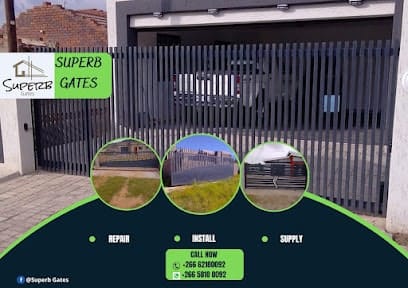
Superb gates is a Steel fabricator establishment in Ladybrand, Free State, South Africa
Free State
South Africa
Sorry, no records were found. Please adjust your search criteria and try again.
Sorry, unable to load the Maps API.
Steel Fabricator Services in Ladybrand, Free State
In Ladybrand, a town nestled in the Free State, steel fabricator services typically cover a broad range of structural and specialised metalwork designed to meet commercial, industrial and residential needs. Local fabricators commonly operate with a focus on practical, durable solutions that withstand the climate and logistics of the region, from transportation corridors to rural developments. The scope often extends from initial design concepts to finished assemblies, finished with protective coatings suitable for outdoor exposure and high-traffic environments.
Core offerings usually include the fabrication of structural steel frames for buildings, mezzanines, and workshops, as well as architectural metalwork such as balustrades, staircases, and bespoke gates. Many projects also involve light fabrication tasks such as fabrication of supports, brackets, handrails, and custom fittings. In addition, steel fabricators frequently handle fabrication for agricultural and mining-related equipment, including tanks, frames, supports, and machinery housings. When required, these services may be complemented by assembly on site, installation supervision, and adjustments to ensure correct alignment and fit.
Workflows characteristically begin with an initial consultation or site assessment, where measurements, load considerations, and client requirements are discussed. Designers or draughtspeople may prepare sketches or scaled drawings to help visualise concepts before a proposal is developed. Depending on the shop, material selection is guided by factors such as strength requirements, corrosion resistance, heat treatment, and budget. Common choices include mild steel for general purpose fabrication, along with stainless steel or aluminium for environments demanding greater corrosion resistance or different aesthetic finishes.
Fabrication typically involves cutting, bending, welding, and assembly, followed by finishing processes. Welding methods may include MIG, TIG, or stick welding, selected to suit material thickness and project specifications. Cutting operations can employ shearing, sawing, or plasma or laser cutting where higher precision is needed. Finishing steps often address surface preparation, degreasing, and protective coatings, with painting, powder coating, galvanising, or zinc-rich primers as appropriate for exterior use. Quality control is usually exercised through measurements, fit checks, and sometimes non-destructive testing for critical structures.
Delivery and installation are practical considerations for customers in Ladybrand, where access routes and site conditions influence scheduling. Some fabricators offer on-site assembly or supervision to ensure correct placement and secure connections, while others provide ready-to-install components for contractors or clients to assemble. Considerations such as corrosion exposure, local climate, and maintenance plans inform the recommended protective finishes and maintenance cycles. Routine maintenance may involve periodic cleaning, inspection of welds and joints, and reapplication of protective coatings to prolong service life.
Customers can expect a pragmatic, safety-conscious approach, with emphasis on accurate measurements, durable connections, and long-term value. Lead times reflect project scope, material availability, and production capacity, and clear communication about milestones helps coordinate delivery, installation, and commissioning. While the exact arrangements vary between workshops, the overarching model remains focused on transforming raw steel into trusted structures and fittings that support commerce, industry, and daily life in the Ladybrand area.
Practical considerations for engaging a steel fabricator include confirming regulatory compliance relevant to structural work, such as weight-bearing design and workplace safety standards, as well as clarifying responsibilities for site access, power supplies for workshops, and any required permits for on-site installations. By choosing a local provider, clients can benefit from proximity for site visits and easier coordination with subcontractors or engineers involved in the project, alongside an understanding of regional environmental and logistical factors.
- Structural frames and mezzanine floors
- Architectural metalwork: balustrades, stairs, gates
- Fabrication for agricultural and industrial equipment
- On-site assembly and installation support
- Protective finishes: painting, galvanising, powder coating