
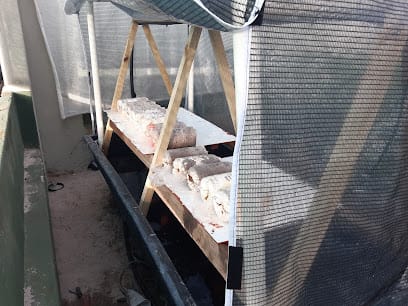
SPeS is a Agricultural service establishment in Gansbaai, Western Cape, South Africa
SPeS: Circular CEA Systems and Urban Farming Solutions in Gansbaai
SPeS operates as a South African enterprise focused on circular, climate-resilient agricultural solutions. Its offering centrepiece is the Sustainability Testing Station (STS), described as an urban farm that has undergone more than a decade of real-world trials at the southern tip of Africa. The organisation emphasises an In My BackYard (IMBY) ethos, aiming to deliver products and systems designed to withstand harsh Bundu conditions by learning from practical field experiences rather than theory alone.
Hosted within the broader concept of circular agriculture, SPeS showcases engineered systems that integrate mushroom cultivation, vermiculture, and vermi-ponics. The site presents three main domains—Fungi (mushrooms), Monera (vermiculture), and Plantae (vermiponics)—as part of a cohesive approach to reducing waste, reusing resources and recycling nutrients. This framework underpins the company’s aim to provide durable, tested solutions rather than generic, one-size-fits-all products.
In practical terms, the SPeS catalog highlights a range of equipment and consumables associated with its core vision. The product pages underscore items such as spawn bags with fine filtration, specialised mesh patches, and spawn-bag systems of varying sizes. The assortment appears targeted at professional or semi-professional growers seeking reliable, commercial-grade components for controlled cultivation environments. The presence of multiple variants and price ranges signals an emphasis on modularity and scalable applications within small- to mid-scale operations.
Beyond individual products, SPeS presents a curated hub for mycology and organics, including the Mycology Hub and Organics Hub. The Mycology Hub features containers and kits related to fungal research and cultivation, such as master kits for alginate inoculation and autoclavable petri dishes, suggesting an educational and practical angle for researchers, hobbyists, and businesses exploring fungal systems. The Organics Hub offers vermicomposting solutions—ranging from starter kits to larger worm farms—and related tools designed to convert kitchen waste into nutrient-rich inputs for growing systems. This aligns with a broader sustainability narrative that blends experimentation, hands-on practice, and scalable infrastructure.
The Hydraulics and Hydroponics sections indicate attention to soil-less and soil-assisted growing methods, with products like vermicompost-charged biochar highlighting the aim to improve soil health and nutrient cycling. Taken together, the service mix positions SPeS as a supplier of practical hardware and consumables for users seeking durable, field-tested solutions rather than purely theoretical guidance.
Typical job types and projects
Based on the presented content, typical engagements likely include the provisioning of specialist grow systems, bulk filtration and spawn-related components for mycology projects, and vermiculture-based waste recycling initiatives. The range of products appears suitable for commercial mushroom cultivation, vermicomposting installations, and vermi-ponics experiments. The STS framework implies that projects are tested in real-world settings before being endorsed with a badge, suggesting a preference for procedures and configurations with demonstrable performance in the South African climate and conditions.
How requests usually work
SPeS presents an e-commerce flow for product selection, ordering and delivery, with options to add items to a cart and view variants. The presence of “Master Courses” indicates an educational layer that complements product sales, enabling buyers to upskill in areas related to fungal cultivation, vermiculture and sustainable farming techniques. The IMBY philosophy and the STS badge imply a diligence in choosing solutions that have been weather-tested and adapted to local realities, which can reassure buyers seeking durable, locally tested equipment and knowledge.
Practical tips for customers
- Assess environmental conditions: Leverage the STS ethos by selecting products that have been field-tested in comparable climates and conditions to the intended site in Gansbaai or the Western Cape.
- Consider scale and modularity: Start with modular components (e.g., smaller spawn-bag systems or starter vermicomposting kits) and scale up as outcomes are observed in practice.
- Utilise the educational offering: Engage with available Master Courses to build practical understanding of mushroom cultivation, vermiculture and related circular systems before committing to large purchases.
- Prioritise filtration and containment: When dealing with fungi and microbial cultures, choose products with proven filtration characteristics to ensure environmental control and product integrity.
- Plan for waste recycling: Incorporate vermicomposting solutions as part of a closed-loop approach to waste management and nutrient recycling within growing operations.
Location and service area
SPeS markets its circular agricultural systems with reference to the Southern African context, emphasising field-tested solutions suitable for harsh environments. While the core content highlights the STS and IMBY concepts, specific local service details for Gansbaai or Western Cape are not enumerated in the available material. The overarching focus remains on practical, resilient farming installations designed for real-world use in South Africa.
Overall, SPeS presents a coherent offering for agricultural practitioners seeking robust, tested systems that align with a circular economy approach. The combination of hands-on equipment, mycology and organics hubs, and an educational framing supports a holistic pathway from concept to practical application in small-scale commercial farming and innovative urban agriculture.
Gansbaai
Western Cape
South Africa
Sorry, no records were found. Please adjust your search criteria and try again.
Sorry, unable to load the Maps API.
Agricultural Services in Gansbaai, Western Cape
Gansbaai, a coastal town in the Western Cape, presents a distinctive setting for agricultural service provision. The local agriculture sector balances coastal climate influences with inland farming practices, creating demand for a range of services aimed at crop production, horticulture, and livestock management. Service providers typically operate to support smallholder plots as well as larger farming enterprises that require specialised input, maintenance, and advisory work suited to the region’s conditions.
Core offerings commonly observed in this area include soil and crop testing, irrigation management, fertilisation planning, pest and weed control, and farm equipment maintenance. Many operations also deliver planning and implementation support for seasonal crops, fruit trees, and vineyards. Agricultural service providers may assist with water management strategies aligned to the Western Cape’s rainfall patterns and the shared concerns about water conservation. In addition, livestock management services—such as routine health checks, feed optimisation, and pasture or fencing maintenance—address the needs of rural holdings within and around Gansbaai.
Customers can expect a practical emphasis on troubleshooting and maintenance, rather than one-off installations. The typical workflow involves an initial assessment, where a technician or agronomist surveys soil health, irrigation efficiency, pest pressures, and animal welfare considerations. Following this assessment, a tailored plan is often presented, outlining interventions, timelines, and any required equipment or products. Work is generally structured to fit the farming calendar, with attention paid to seasonal peaks and constraints related to coastal weather. Clear communication about expectations, potential risks, and the limits of what can be achieved within a given budget is a common feature.
In practice, agricultural services in Gansbaai frequently integrate with local suppliers and contractors to source inputs such as mulch, compost, fertilisers, irrigation components, and fencing materials. While the exact mix of services varies, many providers emphasise environmentally conscious practices appropriate to the regional setting, including water-efficient irrigation methods, soil-friendly amendments, and responsible pesticide use. Plant health and soil fertility are managed with a view to long-term sustainability, rather than short-term yield gains alone. For livestock operations, attention to shade, shelter, and safe handling often accompanies routine veterinary or nutrition-related tasks.
Practical considerations for engaging agricultural services in Gansbaai include travel logistics, given the area’s dispersed farmlets and varying access routes. Providers may operate on a mobile basis, bringing equipment to sites or coordinating on-site visits, depending on the task. It is common for service arrangements to be price- and time-bound, with quotes reflecting scope, materials, and labour. Clients should assess the compatibility of a service provider’s scheduling with the farm’s daylight hours and wind or coastal weather patterns, which can influence fieldwork and spraying operations.
Quality expectations typically centre on reliability, professional knowledge, and adherence to safety protocols. Techniques and products are chosen with regard to local regulations, environmental considerations, and the specific crops or livestock involved. Contracts in this sector may outline service frequency, reporting formats, and any required follow-up visits to monitor progress. Overall, agricultural service offerings in Gansbaai aim to support productive farming while accommodating the particular climate realities of the Western Cape coast.
For potential clients, the focus remains on practical outcomes: healthier soil, efficient water use, timely pest and disease management, well-maintained equipment, and dependable support for seasonal production. Planners and farmers are encouraged to discuss goals openly, verify credentials where possible, and clarify any assumptions about access, timing, and affordability before committing to a service arrangement.