
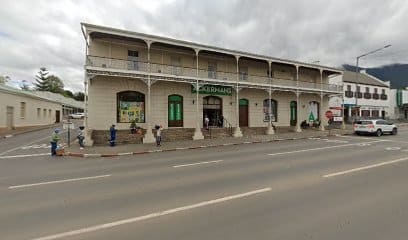
Agri Online is a Agricultural service establishment in Swellendam, Western Cape, South Africa
Agri Online: a South African online marketplace for agricultural services and equipment in Swellendam
Agri Online operates as an online marketplace focused on agricultural products, equipment and services, based in Swellendam in the Western Cape. The site presents itself as a hub where buyers, sellers and traders can connect, list items and search across a range of agricultural categories. The core offering is a “Buy, Sell & Trade” platform that enables users to browse latest listings, post advertisements and respond to opportunities in a centralised online environment. The catalogue includes farm equipment, heavy machinery, livestock feed, livestock products and agricultural chemicals, reflecting the broad needs of farming businesses in the region and beyond.
The platform is organised to support straightforward interactions between participants. Visitors can navigate through “Latest Listings” and “Featured Ads” to assess current market activity, with practical examples such as tractors, implements, weigh scales and other farm assets appearing in the public listings. The site’s search functionality is designed to filter results by type, category, make, condition and price, helping users locate items that match specific operational requirements. There is also a dedicated search page that presents filters including keyword, location and price range, enabling targeted sourcing for equipment, replacements and farm supplies.
Service delivery on Agri Online appears to be primarily self-service for users: owners or agents create and manage their listings, while prospective buyers review items and contact sellers directly via the platform. The site offers a pricing structure for business users that ranges from a free option to premium packages. The Free Package provides for a modest level of activity with a specified number of listings per month and visitor statistics, while premium plans offer higher listing quotas, banner advertising, social media integration and enhanced visitor metrics. In practice, this model supports both casual sellers and more proactive vendors seeking broader visibility within the agricultural community.
Customer experience on Agri Online, as reflected in visitor feedback, tends to emphasise convenience and comprehensiveness. Review snippets indicate that users perceive the platform as a place “they have everything that needed” and praise service levels, with terms such as “excellent service” and positive remarks about the breadth of available items. The sentiment from reviewers suggests a community-oriented marketplace where buyers can encounter a wide range of agricultural goods and equipment, often within a specialised niche such as South African farming equipment and related services.
Operational details for customers include practical tips to optimise use of the platform. Prospective buyers are advised to leverage the site's filters to narrow searches by category or make, and to review listing images, descriptions and the stated price before initiating contact. For sellers, presenting clear product information, accurate condition descriptors and competitive pricing can help attract interest in a competitive marketplace. The site also uses cookies to enhance user experience and outlines compliance with privacy terms aligned to POPIA, which may be relevant for business users handling listing data and communications.
In terms of location and reach, Agri Online highlights Swellendam and the broader Western Cape, while also presenting listings that imply a wider South African audience, especially given the national scope of agricultural trade platforms. The platform features a globalisable yet locally relevant business model, catering to rural and peri-urban farming enterprises with needs for tractors, implements, parts, inputs and market access. While specific hours of operation are not prominently stated on the site, the platform is described as an online resource available around the clock for listing management, searching and communications, with practical guidance around time zones and business hours generally inferred from standard digital marketplace practices.
For those assessing access within the Swellendam region or the wider Western Cape area, Agri Online provides a practical, middleman-free interface where listings flow directly between buyers and sellers. Users can explore current offerings, assess value and respond to opportunities without reliance on an intermediary, aside from the platform’s hosting and listing tools. The presence of current news and updates on the site—covering topics such as market movements, policy discussions and industry developments—adds context for users seeking to understand market conditions as they review listings.
Practical tips for customers include: using precise keywords and filters to locate relevant equipment or inputs; reviewing multiple listings to compare features and prices; and noting listed conditions and delivery or collection arrangements where stated. Visitors should be mindful of privacy terms and cookie notices while navigating the site. For operators exploring premium packages, considerations include the potential reach from bundled banner advertising and social media exposure, balanced against monthly costs and the volume of listings required to achieve tangible visibility gains.
Overall, Agri Online presents a practical, user-friendly online marketplace for agricultural assets in Swellendam and beyond. It supports a spectrum of farming activities by aggregating equipment, inputs and related services into a single digital venue, backed by a community of buyers and sellers who share a focus on South African agriculture and regional exchange.
Swellendam
Western Cape
South Africa
Sorry, no records were found. Please adjust your search criteria and try again.
Sorry, unable to load the Maps API.
Agricultural Services in Swellendam, Western Cape
In Swellendam, Western Cape, agricultural service providers offer a range of practical support designed to keep farms productive and compliant with regional conditions. The services typically address crop production, livestock management, farm infrastructure, and environmental stewardship. An informed farm operator can expect pragmatic, on‑the‑ground assistance that supports efficient planning, implementation, and maintenance across seasons.
Core offerings commonly include agronomy and crop management. This encompasses soil health assessments, nutrient planning, pest and disease monitoring, and advice on seed selection and planting schedules. Operators often rely on soil sampling to determine nutrient status and pH levels, guiding fertiliser applications that aim to optimise yield while minimising environmental impact. Integrated pest management is frequently emphasised, combining cultural practices with targeted interventions to reduce reliance on chemicals and to protect beneficial organisms.
Water management constitutes a central consideration in the region. Services may cover irrigation design and optimisation, including scheduling for drip or micro-irrigation systems and the adjustment of irrigation intervals in accordance with crop requirements and seasonal rainfall. Guidance on water conservation, gauge reading, and pump maintenance helps safeguard reliable irrigation while keeping operating costs in check. For farms with larger water needs, consultants might advise on crop zoning and efficient irrigation layouts to minimise waste and maximise cover during drought periods.
Farm equipment support is another common component. This can range from routine maintenance of tractors and implements to advice on machinery compatibility with prevailing farming practices. Where appropriate, service providers offer equipment inspection, repairs, and parts sourcing, as well as guidance on implement selection for tillage, planting, pruning, and harvesting activities. The emphasis remains on reliability, safety, and long-term value rather than on promoting a particular brand or model.
Livestock-related services are often tailored to the mix of animals found on Swellendam farms. These may include veterinary guidance, routine health and welfare oversight, nutritional planning, and the management of fencing, housing, and water systems. Seasonal tasks such as lambing or calving support, breeding programme planning, and pasture management can be part of a broader service package. In addition, some providers offer assessments of grazing capacity and forage sourcing to ensure that livestock needs are met throughout the year.
Farm infrastructure and safety form an essential strand of agricultural services. This includes fencing and gate maintenance, irrigation reservoirs, shed and storage optimisation, and drainage improvements to reduce soil erosion and waterlogging. Fire prevention and risk assessments are practical considerations for rural sites, along with adherence to safety regulations for chemical storage, handling, and disposal. Waste management and biosecurity measures may also be addressed to support sustainable farm operations.
Consultants typically work with farm owners to develop plans that align with seasonal cycles and local market conditions. Engagement often begins with a needs assessment, followed by practical recommendations, cost estimates, and scheduling for implementation. The collaborative approach aims to translate agronomic knowledge into actionable steps that fit the unique landscape, climate, and resource availability of Swellendam. Emphasis is placed on clear communication, measurable outcomes, and ongoing evaluation to adjust practices as conditions evolve.
Practical considerations for obtaining agricultural services in Swellendam include geographic accessibility, as many farms lie in rural zones where travel times influence scheduling. Arranging for site visits, on‑farm demonstrations, and timely follow‑ups can improve programme efficiency. Labour availability, equipment availability, and local regulatory compliance are key factors in planning. Where environmental stewardship is valued, service providers may incorporate soil conservation, biodiversity considerations, and responsible agrochemical use into their advisory framework.
- Soil testing and nutrient management
- Pest, weed, and disease monitoring
- Irrigation design, scheduling, and maintenance
- Equipment inspection and basic repairs
- Livestock health, nutrition, and housing guidance
- Fencing, drainage, and storage infrastructure